
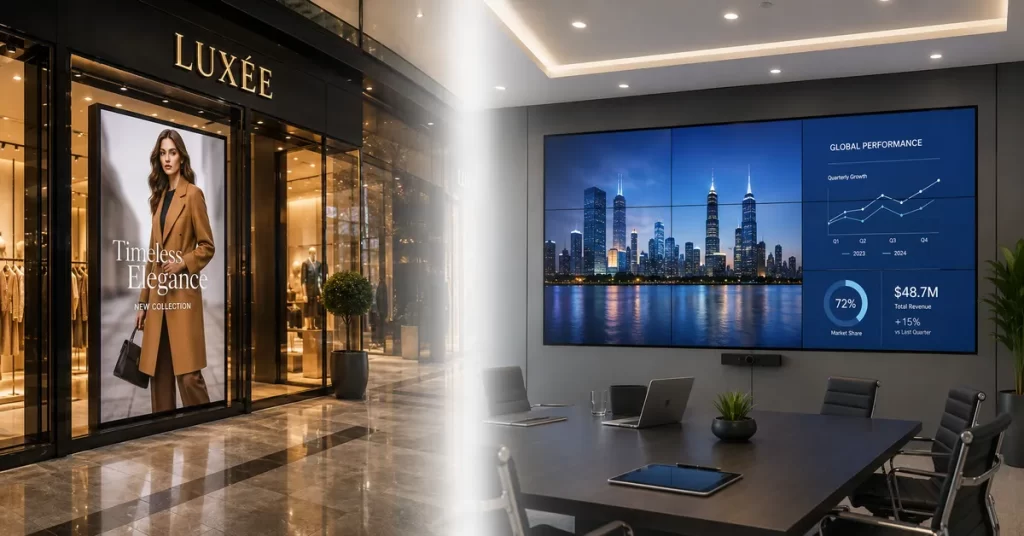
If your business needs a display that is bright, attention-grabbing, and easy to update, LED signage is often the better choice. For Malaysian indoor spaces, it usually wins when you want stronger visual impact, more flexibility, and a more premium presentation than TV, projector, or printed signage can offer.
Intro
Choosing the right signage can feel simple at first, but the best option depends on how the space is used every day. A TV, projector, or printed sign may work well in some situations, but LED signage becomes the stronger option when brightness, visibility, and content changes matter most.
Why this comparison matters
Many businesses start with what feels cheapest or most familiar, then realise the display does not suit the room or the message. TVs are good for smaller indoor uses, projectors suit dark rooms or temporary setups, and printed signs are fine for static messages, but LED signage is built for dynamic content and stronger visibility. For Malaysian businesses in malls, lobbies, showrooms, and retail lots, that difference can affect both customer attention and day-to-day convenience.
LED signage vs TV
TVs are useful when you only need a modest-sized screen and the viewing distance is short. LED signage becomes better when you want a larger, more seamless display that feels more premium and stands out in busier indoor environments. It is also easier to scale LED signage beyond standard TV sizes, which makes it more suitable for feature walls, retail promotion areas, and branded spaces.
When LED wins over TV
- You need a larger format than a regular TV can provide.
- You want a more seamless and eye-catching look.
- You plan to show promotional content that changes often.
- You need better presence in brighter indoor areas.
LED signage vs projector
Projectors can work well in dark rooms or temporary presentation setups, but they lose advantage when ambient light increases. LED signage performs better in brighter indoor spaces because the display itself emits light, making the image easier to see and more reliable across different lighting conditions. This is why LED signage is often the stronger choice for conference rooms with light spill, reception areas, and public-facing spaces.
When LED wins over projector
- The room is not fully dark.
- You want consistent brightness throughout the day.
- You need a polished look with less setup sensitivity.
- You want a long-term installation rather than a temporary one
LED signage vs printed signage
Printed signage is still useful when the message is static and does not need frequent updates. LED signage is better when you need to change promotions, pricing, or announcements regularly, because content can be updated digitally instead of reprinting materials each time. That makes LED signage more flexible and often more cost-effective over time for businesses that run frequent campaigns.
When LED wins over print
- Your offers change often.
- You want motion, video, or animated content.
- You want to reduce reprinting costs.
- You want a more modern and premium customer experience.
Best-fit business situations
LED signage usually makes the most sense for retail stores, sales galleries, malls, hotel lobbies, cafes, and corporate reception areas. These are places where first impressions matter and the content often changes, whether it is for promotion, branding, menu boards, or visitor information. It is especially effective when you need the display to do more than simply show a fixed message.
Examples
- Retail promotion wall for changing offers.
- Sales gallery display for property launches.
- Lobby screen for brand storytelling.
- Cafe or restaurant board for rotating menu highlights.
- Corporate reception display for visitor information.
Simple decision guide
A simple way to decide is to ask what matters most: size, brightness, or flexibility. If you want the brightest and most impressive indoor display with easy content updates, LED signage is usually the best option. If the use is smaller and more basic, a TV, projector, or printed sign may be enough.
Choose LED signage if
- You need high visual impact.
- You update content often.
- You want a premium look.
- The space has normal or bright indoor lighting.
Choose another option if
- The message is static.
- The room is dark and temporary.
- The display size is small.
- Budget is the main constraint.
Closing
For MicroZone readers, the real question is not whether LED signage is “better” in general, but whether it is better for their space, audience, and content schedule. In many Malaysian indoor settings, LED signage becomes the smarter investment once the business needs stronger presence, faster updates, and a more polished customer experience.